Buying a first home is one of the largest financial decisions a person will make. The Bay of Quinte region offers genuine opportunity for first-time buyers, with price points that remain accessible compared to most of southern Ontario. But the process has more steps, more costs, and more decisions than most people expect going in. This guide covers the full sequence from preparation through closing day.
Step One: Know the Numbers Before Shopping
Before looking at a single listing, a first-time buyer should understand three numbers: their gross household income, their total monthly debt obligations, and the amount of cash they have available for a down payment and closing costs.
Canadian mortgage lenders use two ratios to determine borrowing capacity. The Gross Debt Service ratio caps housing costs (mortgage, taxes, heating, half of condo fees if applicable) at roughly 39 percent of gross income. The Total Debt Service ratio caps all debt payments including housing at roughly 44 percent. These are guidelines, not exact thresholds, and individual lenders vary.
A mortgage pre-approval from a bank or broker turns those numbers into a concrete borrowing limit. Pre-approval also locks in a rate for 90 to 120 days, which provides protection if rates rise during the shopping period. The Chisholm Real Estate Team recommends getting pre-approved before booking a first showing.
Step Two: Understand the Down Payment
Canadian rules require a minimum down payment of 5 percent on the first $500,000 of the purchase price and 10 percent on the portion between $500,000 and $1.5 million, the ceiling for an insured mortgage since December 2024. Homes priced at $1.5 million or more require at least 20 percent down. On a $450,000 home in the Bay of Quinte region, the minimum works out to $22,500.
Buyers putting less than 20 percent down must also pay mortgage default insurance, commonly called CMHC insurance. This premium is added to the mortgage balance and typically adds several thousand dollars to the total amount borrowed. It is not optional. It protects the lender, not the buyer, but it does allow buyers to enter the market with less cash up front.
Two federal programs help first-time buyers build their down payment:
The First Home Savings Account (FHSA) allows contributions of up to $8,000 per year, to a lifetime maximum of $40,000. Contributions are tax-deductible, and withdrawals for a qualifying home purchase are tax-free. For buyers who can plan a year or two ahead, this is the most efficient savings vehicle available.
The Home Buyers' Plan (HBP) allows first-time buyers to withdraw up to $60,000 from their RRSPs tax-free for a home purchase. The withdrawal must be repaid over 15 years, starting two years after the withdrawal. This is useful for buyers who have existing RRSP savings but limited cash.
Federal and Provincial Programs for First-Time Buyers
FHSA
- Max Contribution
- $8,000/year ($40,000 lifetime)
- Withdrawal Rules
- Tax-free withdrawal for first home purchase
- Eligibility
- Canadian resident, age 18-71, first-time buyer
- Max Benefit
- $40,000 tax-free + tax deductions on contributions
HBP (RRSP)
- Max Contribution
- N/A (uses existing RRSP)
- Withdrawal Rules
- Borrow up to $60,000 from RRSP, repay over 15 years
- Eligibility
- Canadian resident, first-time buyer (or not owned in 4 years)
- Max Benefit
- $60,000 interest-free loan from own RRSP
Ontario LTT Refund
- Max Contribution
- N/A
- Withdrawal Rules
- Refund of Ontario land transfer tax on first home
- Eligibility
- First-time buyer of eligible home in Ontario
- Max Benefit
- Up to $4,000 refund
Values as of June 2026. Verify current limits with CRA.
Step Three: Budget for Closing Costs
First-time buyers often focus on the down payment and forget about closing costs, which typically add 1.5 to 4 percent of the purchase price. On a $450,000 purchase, that means $6,750 to $18,000 in additional cash needed on closing day.
The main closing costs include:
- Land transfer tax: Ontario's land transfer tax on a $450,000 home is approximately $5,475. First-time buyers in Ontario are eligible for a rebate of up to $4,000, which reduces this cost significantly. A detailed breakdown of these costs is available in a separate post.
- Legal fees: A Real Estate lawyer handles the title search, mortgage registration, and closing documents. Budget $1,500 to $2,500.
- Home inspection: Typically $400 to $600. Not legally required, but strongly recommended.
- Title insurance: Usually $250 to $500.
- Moving costs, utility connections, and immediate repairs: These vary but should not be zero in any budget.
Step Four: Find the Right Neighbourhood
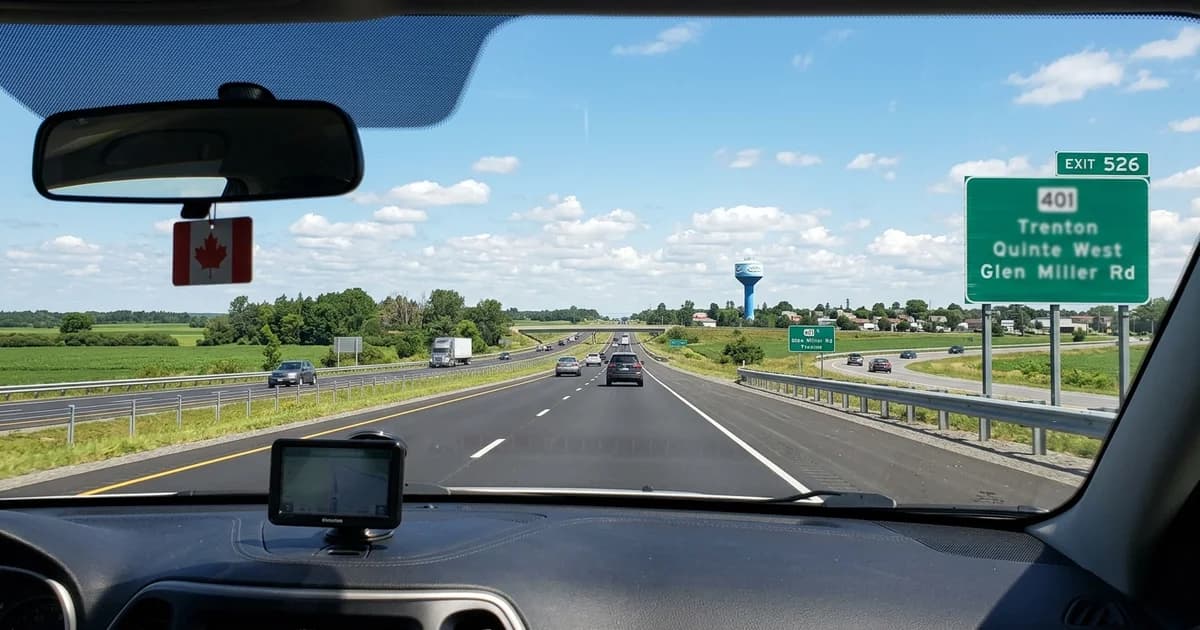
The Bay of Quinte region covers a wide area with very different residential characters. Belleville offers urban amenities and the widest range of housing. Quinte West and Trenton are popular with military families posted to CFB Trenton. Prince Edward County appeals to lifestyle buyers and remote workers. Smaller communities like Stirling, Tweed, and Brighton offer rural character at lower price points.
First-time buyers should visit neighbourhoods at different times of day and on different days of the week. A street that feels quiet on a Tuesday afternoon may tell a different story on a Friday evening. Drive the route to work, to the grocery store, and to the school during the hours that commute would actually happen.
Step Five: Make an Offer That Protects the Buyer
An offer in Ontario is a legally binding contract once accepted. First-time buyers should work with a Real Estate professional who explains each clause and condition before signing.
Standard conditions include:
- Financing condition: Gives the buyer a set number of days to confirm that their lender will approve the specific property and purchase price.
- Home inspection condition: Gives the buyer the right to have the property professionally inspected and to negotiate repairs or withdraw if significant issues are found.
- Status certificate condition (condos only): Allows review of the condo corporation's financial health and rules.
In a competitive market, some buyers feel pressure to waive conditions. The Chisholm Real Estate Team advises caution here. A home inspection can reveal issues that cost tens of thousands of dollars to repair. A financing condition protects against buying a home the lender will not fund. Conditions exist for a reason, and removing them to win a bidding war carries real risk.
Step Six: The Mortgage Stress Test
Since 2018, all Canadian mortgage applicants must pass a stress test. The buyer must qualify at the higher of their contract rate plus 2 percent or the Bank of Canada's benchmark rate (currently 5.25 percent). This means that even if a buyer's actual rate is 4.5 percent, they must demonstrate they could afford payments at 6.5 percent.
The stress test reduces the maximum purchase price a buyer can qualify for compared to what the numbers might suggest without the test. It also provides a built-in buffer against future rate increases, which is a protection rather than just a hurdle.
Step Seven: Closing Day
Closing day is when ownership transfers. The buyer's lawyer handles the legal mechanics: transferring funds, registering the deed, and disbursing mortgage proceeds to the seller. The buyer receives the keys, usually by mid-afternoon.
Before closing, the buyer should do a final walkthrough of the property to confirm that the home is in the condition agreed upon, that included items (appliances, fixtures) are present, and that the seller has vacated.
After closing, register for utility accounts, update the mailing address, and arrange for home insurance to be active from closing day forward. Insurance must be in place before the lender will release mortgage funds, so this step should not be left to the last day.
The Bay of Quinte Advantage
The Bay of Quinte region remains one of the most accessible markets in southern Ontario for first-time buyers. The combination of lower purchase prices, available inventory, and a growing community base means that ownership is still within reach for households that have been priced out of the GTA, Kingston, or Ottawa.
The Chisholm Real Estate Team has been guiding first-time buyers through every step of this process since 2000. Reach out for a conversation about current market conditions, neighbourhood options, or any specific question about the buying process.
Last reviewed: July 16, 2026